

How To Take Indoor Pictures With Windows
When I first started indoor photography, I was afraid of the limitations. As a natural light enthusiast, I wanted to have as few restrictions every bit possible.
When I discovered the positive sides of this genre, I was able to pinpoint my creative weaknesses. Information technology helped me strengthen the skills I already had.
Indoor photography is a flexible genre for several reasons:
- In that location'due south usually some kind of bogus light to use it to take unique photographs;
- Information technology doesn't need a massive budget; and
- It's open up to photographers of all kinds.
How do you take practiced indoor pictures? Here are 10 photography tips on how to become meliorate at shooting inside.
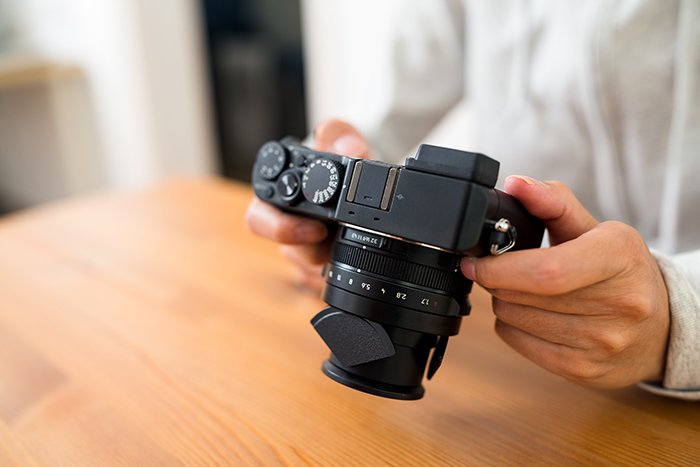
[Note: ExpertPhotography is supported past readers. Product links on ExpertPhotography are referral links. If y'all use one of these and buy something, we make a trivial chip of money. Need more info? Run across how it all works hither.]


x. Play With High ISO Numbers
Indoor photography lighting can be very complicated. Especially when it'due south almost dark outside. To take sharp photographs, y'all'll accept to increase your ISO number. Equally scary every bit it might sound, it won't ruin your photographs.
Then what is the best ISO setting for indoor photography? In general, ISO 100 or 200 can work well if you are using a tripod and you accept plenty brightness.
If you are shooting from your hand, you lot have to enhance your ISO to 800 or 1000. Sometimes even higher, as you lot will find from my camera settings beneath.
I took the photos above on a gloomy twenty-four hour period. I used both natural window low-cal and artificial i.
These are the camera settings I used:
- Discontinuity: ƒ/2.5
- Shutter speed one/xx
- ISO 5000
Though every camera is unlike, nearly modern ones take a high noise tolerance. Using my Catechism 5D Marking Iii, I can take all kinds of indoor photographs without making them look too grainy.
The camera I used before this, a Canon 60D, produced a trivial more grain when I played with ISO. But this effect created a cinematic feeling that complemented my photographs.
9. Focus on Insignificant Details
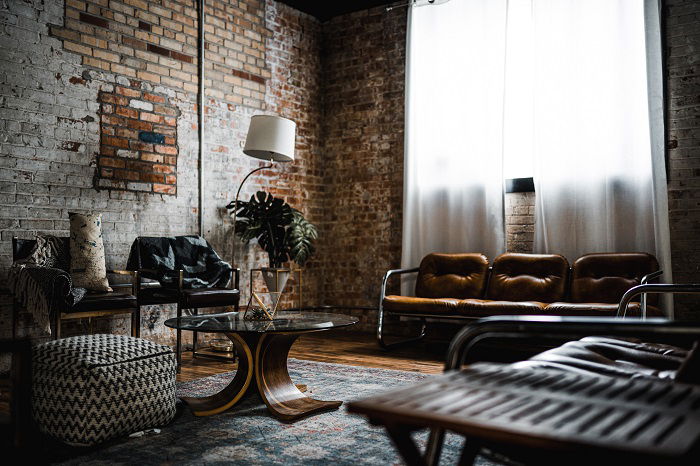
Indoor photographs can expect very elementary, especially if y'all're shooting in an empty or abandoned infinite. To brand upwardly for this, you can add eye-catching elements to your compositions.
Many of united states of america don't have studios. Just you lot can create your own using things you see every twenty-four hours. Search vibrant objects that you could turn into subjects, foregrounds, or backgrounds.
Have a await at your environment. What do y'all usually take for granted? Could you utilize that particular in a photo?
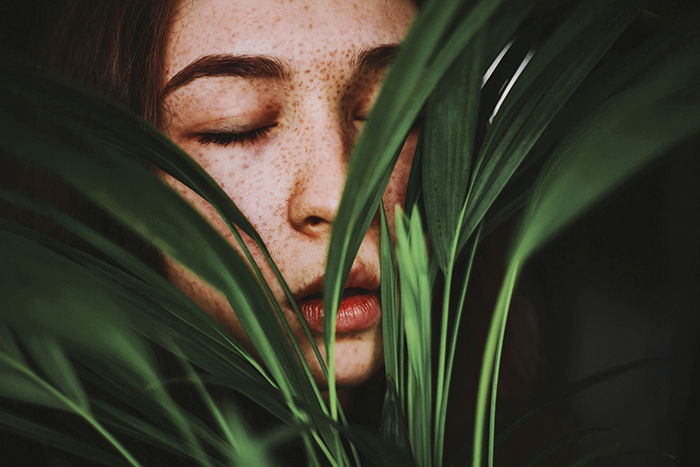
Here'due south an example from my own life: I have a few plants on my table. I capeesh them for what they are or use them as subjects in my portraits.
Plants brand amazing foregrounds, especially when information technology comes to simple indoor photographs.
8. Use Indoor Artificial Lite Whenever Y'all Can
What is the best lighting for indoor photography? Many photographers would say that natural lighting.
But I say that any indoor lighting yous have tin can give you fantastic results!
My experiments with simple artificial calorie-free led to my favourite portraits. I've never used professional person studio lighting in my life. But I believe in the power of elementary calorie-free sources.
A few examples are lamps, torches, and phone screens. Regardless of their simplicity, these objects are great to add together a spark to your photos.
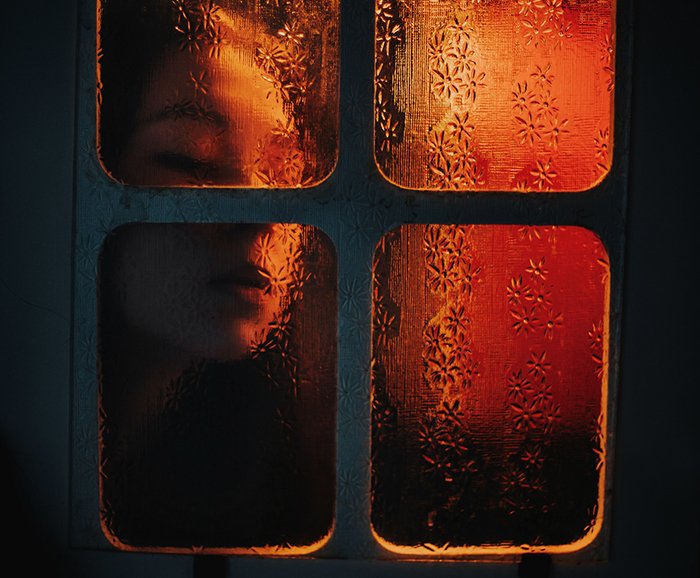
Y'all can employ artificial light not only for brightening your subject. It can also help you to focus better. When I take self-portraits in dark locations, I have to make sure that the autofocus characteristic captures the right details.
To do this, I flash a torch on my confront until the camera finds me. In one case this is washed, I tin have photos similar the one above.
Use artificial light sources to get the right focus. It can add more depth to your photographs. Information technology too helps to familiarise yourself with different lighting techniques.
And when you do get your hands on professional person studio equipment, you lot'll already know what to practise!
7. Know the Best Times of 24-hour interval for Shooting Indoors
Natural light is very express at indoor locations. If yous desire to get equally much light equally possible indoors, shoot at these times of day:
- Midday: Shooting outdoors during this time results in very harsh and unflattering photos. But midday light looks fantastic indoors. Identify your subject in forepart of a curtained window to get the most flattering results.
- Golden hour: Yous might already exist familiar with this magical time of day. It is presently later on sunrise and before sunset. The diffused light is perfect for every photography genre.
- Twilight: After sunset, the sky takes on a pink hue. Combined with artificial lights, this tin go the perfect background for mysterious silhouettes.
half-dozen. Brand the Most of Every Room
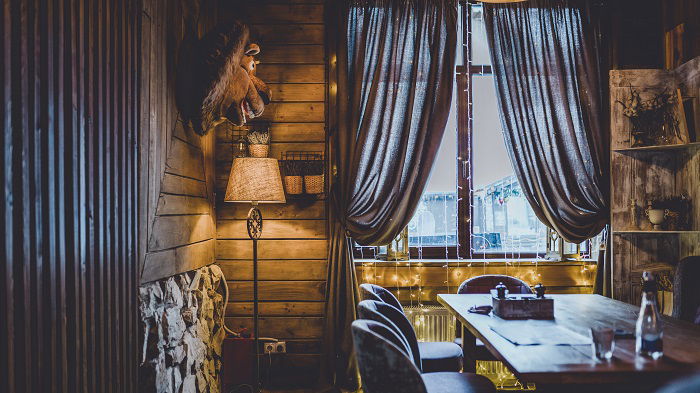
Every room has its beauty. The white walls of an empty room can be used as backdrops for classical portraits or notwithstanding life. A cluttered room can reflect your subject field's personality. It tin can add a touch of colour to your background, or be the subject itself.
Every indoor location tin can exist a great place for a photoshoot.
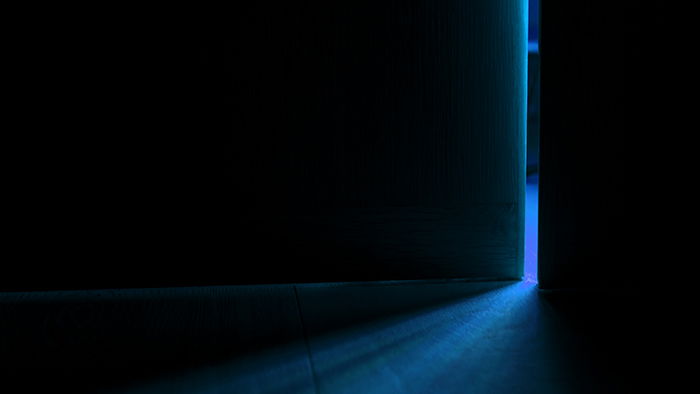
When you lot take photos indoors, notice every room. Observe details to include in your compositions. Think about how to get good lighting in that specific room.
Sometimes, this might but hateful taking photos next to a well-lit doorway. You don't have to overthink it.
Train your eye to see potential in every indoor space. You'll notice a neat comeback in your piece of work.
five. Create Your Own Indoor Photography Resource
DIY projects should exist your best friends. Likewise existence fun, these projects are very helpful and upkeep-friendly. If you want to take your indoor photography to the adjacent level, you lot must experiment with them.
If you don't accept the time for complicated DIY projects, stick to simple hacks. They alter your photography in no fourth dimension.
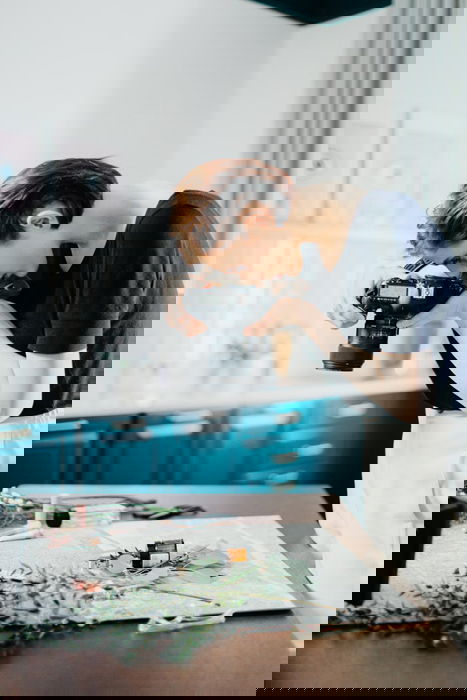
You lot can employ foil to light up your field of study's features if you don't accept access to a reflector. If yous desire to add a dreamy look to your photos, you can cover your lens with cling film.
And if y'all want to create a studio of your own, you can put up a tablecloth behind your bailiwick.
Another example is placing an object in forepart of a sheet of paper taped to a window. This will create a soft lightbox effect.
4. Describe Atmospheres Through Diptychs
Indoor photography is often associated with warmth and cosiness. If you lot are not shooting production photos, you might endeavor to intensify the temper in your work.
This is even more important in portrait photography. This genre relies on emotions to tell compelling stories.
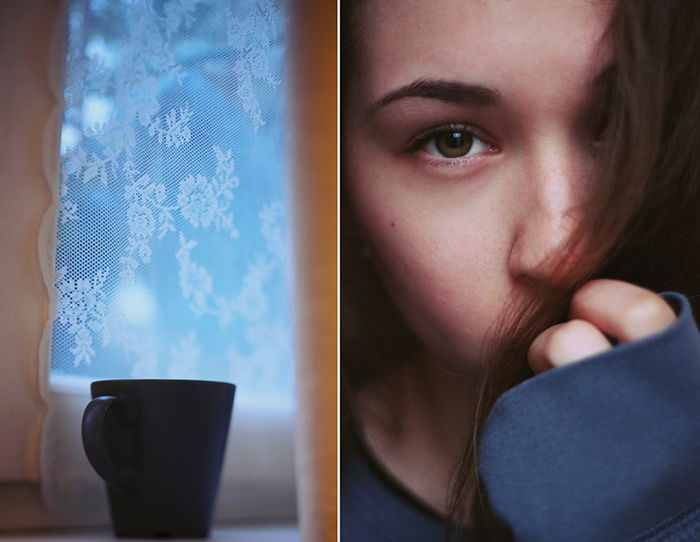
One of the best ways to capture an temper is to photograph various sides of it. When you have a few photos that y'all like, plough them into diptychs (a collage of two photos). They tell a more than wholesome story.
This will give your photographs more than personality and brand them more than relatable. It also gives your viewers a clearer thought of your subject field.
Watching out for diptych-worthy moments volition make you more than beholden of indoor photography. By wanting to tell deeper stories, you lot'll be more aware of details, spaces, and subjects that most people would ignore.
Combined, these things will take a positive affect on your piece of work.
3. To Fit Everything, Employ a Wide-Angle Lens (Or Create a Panorama)
There'southward merely and so much yous tin fit into your camera lens when it comes to indoor spaces. With a prime number or zoom lens, you're going to have to footstep back a flake. And then you can capture both your subject field and their surroundings.
You might not be able to do so because of the room's size. In cases like this, use a broad-angle lens.
If you can't afford a wide-angle lens, make panoramas instead. Panoramas are a bunch of different photos stitched together in Photoshop. They're dandy for people who want to create detailed compositions that resemble medium format photos.
They're too not bad for those who savour taking mural-like photos of indoor environments.
ii. Apply Backgrounds to Depict Your Field of study
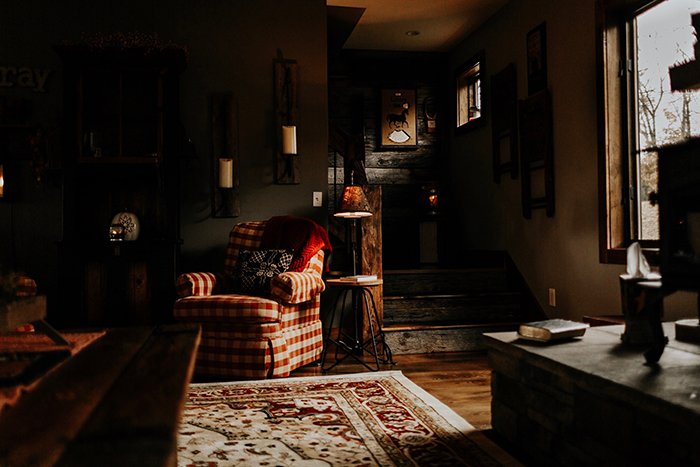
Besides complementing your subject, backgrounds should reflect their personality in some way.
This is much easier to practise indoors considering we associate buildings with homes. They have objects that play a big part in our personal lives.
If yous're planning to take indoor portraits, make sure you get to know your model'southward space. Ask them what items they care nigh most. What part of their room exercise they beloved the almost? What practise they enjoy doing in the comfort of their own space?
Using this information, position your subject in a way that volition reveal both their expression and their favourite items. Including these things in the groundwork will make your photos stand out.
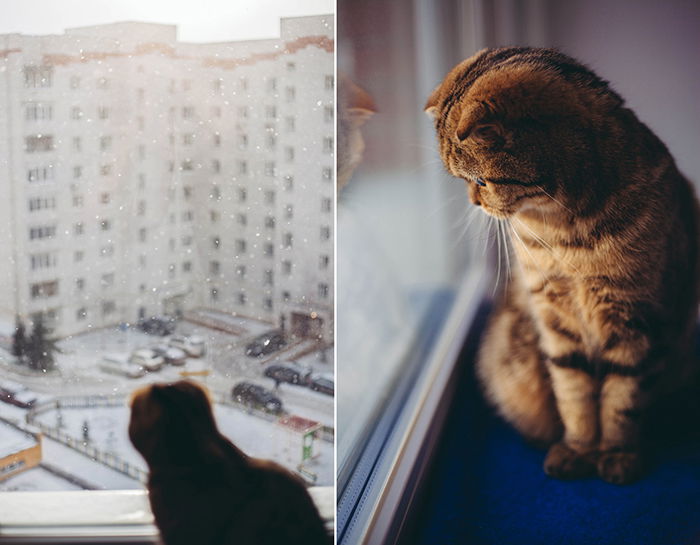
If y'all're planning to take photos of objects, animals, etc., you can practice something like. For case, my cat likes watching snowflakes while sitting on windowsills. To capture her curiosity, I took a closeup next to the window.
I also photographed the snow itself so that the viewer would take a better idea of what she's so curious almost. I made the two photos into a diptych to tell a short story.
1. When All Else Fails, Use Windows
Indoor photography is ofttimes challenging. Specially when you don't take a lot of feel with bogus light, backgrounds, and projects. If you start to feel frustrated, just have photos adjacent to a window.
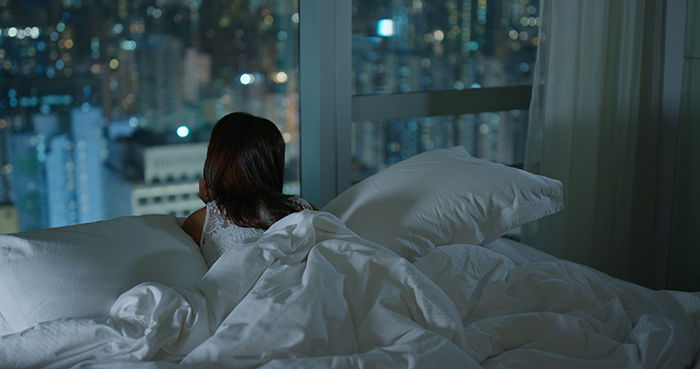
Windows are the best source of natural light. They also make fantastic foregrounds and backgrounds. You can never go wrong with them.
Here are ways you can use them to heighten your compositions:
- Foregrounds: identify your subject area behind a window to create beautiful reflections
- Backgrounds: place your subject in front of a window to create a soft, backlit look
- Subjects: on their own, windows can wait very middle-catching, especially during the golden hour
Conclusion
Indoor photography overflows with frustrating obstacles that outdoor photography doesn't accept. When I began this genre, I was agape of getting bored, taking silly photos, or not making the most of my creative time.
Then I realised how freeing those obstacles were. I establish ways to make indoor photography both enjoyable and challenging. The DIY projects, various lighting setups, and artificial calorie-free helped me in the process.
You, also, can enjoy the perks of existence an indoor photographer. All you have to do is get upwardly, grab your camera, and photograph something that catches your eye. Before y'all know information technology, you'll exist having fun and taking fantastic photographs.
Desire to learn how to improve your photography? Try our Photography for Beginners form today!
Source: https://expertphotography.com/indoor-photography-tips/
Posted by: turnercourry.blogspot.com
0 Response to "How To Take Indoor Pictures With Windows"
Post a Comment